Bond proponents have argued that even though the plan may be flawed, it’s important to approve it anyway because otherwise important projects will be delayed. It’s important to remember, though, that the district could easily have chosen to go to the voters last year, or even earlier, for approval of a bond. (I suggested it!) Then if it had failed, there would have been time to develop a better proposal without interrupting the timeline.
Instead, the board majority waited until the latest possible opportunity to put the question on the ballot—and now they’re using this self-created urgency to pressure people into voting Yes. I don’t blame voters if they don’t react well to being manipulated in this way.
Wednesday, August 30, 2017

Who decides? (part three)
I’ve been writing about the tension between administrative control and elected board control of school decisions. Another example involves the schematic design plan for the renovation of Horace Mann Elementary.
The Mann renovation is part of the district’s facilities master plan. At several meetings earlier this year, the board discussed the development of a design for the plan. Mann is on a very small site adjoining a public park in the middle of a residential neighborhood; there was a lot of community interest in just how we would go about putting a very large addition onto the building.
The board decided to hold a community meeting at Mann to get community input. Between eighty and a hundred people showed up. The district brought some initial design scenarios. Now, I understand that it’s sometimes hard to know how to gauge “community sentiment” from attending a listening post: the room is never of one monolithic viewpoint. But I think it’s fair to say that there was significant sentiment at the listening post for a different balance between outdoor play space, on-site parking, and building placement than that of the district’s own scenarios, or at least for some creative thinking in that direction. I don’t recall anyone suggesting that the addition to the building be made larger; if anything, people wondered if we could create more outdoor play space if the addition were a little smaller.
That was in May. Then, at our meeting last week, the administration presented a schematic design proposal for Mann. What did it look like? Pretty much just like the one the district brought to the community meeting, except with a larger addition. The only apparent effect of the community meeting was to spur the administration to rehearse more extended arguments in favor of its own preferred idea.
Few people were aware that the item was on the agenda. The one community commenter on the issue complained that the district had not followed through on its promises to meet with him and to update him on the progress of the design and had ignored the community input it sought. (Watch his comment here.)
Given the circumstances, three board members (including me) were unwilling to approve the schematic design unless there was additional time for community members to chime in. The board chair immediately raised the prospect that any delay could delay the project. (Yet at the previous meeting, we were at the same step on the Lincoln project, which has the same completion date, and we were told that we could always change the design later.) Ultimately the board put the item on our next meeting agenda. Our administrators all but explicitly said that they’d make sure we received community feedback favoring the proposal in the meantime.
In sum: After we sought community feedback, the administration presented us with a proposal that did not reflect that feedback, and then explained that if the board didn’t approve it, the project could be delayed. Assuming the board approves it under those circumstances, who really decided the issue?
The Mann renovation is part of the district’s facilities master plan. At several meetings earlier this year, the board discussed the development of a design for the plan. Mann is on a very small site adjoining a public park in the middle of a residential neighborhood; there was a lot of community interest in just how we would go about putting a very large addition onto the building.
The board decided to hold a community meeting at Mann to get community input. Between eighty and a hundred people showed up. The district brought some initial design scenarios. Now, I understand that it’s sometimes hard to know how to gauge “community sentiment” from attending a listening post: the room is never of one monolithic viewpoint. But I think it’s fair to say that there was significant sentiment at the listening post for a different balance between outdoor play space, on-site parking, and building placement than that of the district’s own scenarios, or at least for some creative thinking in that direction. I don’t recall anyone suggesting that the addition to the building be made larger; if anything, people wondered if we could create more outdoor play space if the addition were a little smaller.
That was in May. Then, at our meeting last week, the administration presented a schematic design proposal for Mann. What did it look like? Pretty much just like the one the district brought to the community meeting, except with a larger addition. The only apparent effect of the community meeting was to spur the administration to rehearse more extended arguments in favor of its own preferred idea.
Few people were aware that the item was on the agenda. The one community commenter on the issue complained that the district had not followed through on its promises to meet with him and to update him on the progress of the design and had ignored the community input it sought. (Watch his comment here.)
Given the circumstances, three board members (including me) were unwilling to approve the schematic design unless there was additional time for community members to chime in. The board chair immediately raised the prospect that any delay could delay the project. (Yet at the previous meeting, we were at the same step on the Lincoln project, which has the same completion date, and we were told that we could always change the design later.) Ultimately the board put the item on our next meeting agenda. Our administrators all but explicitly said that they’d make sure we received community feedback favoring the proposal in the meantime.
In sum: After we sought community feedback, the administration presented us with a proposal that did not reflect that feedback, and then explained that if the board didn’t approve it, the project could be delayed. Assuming the board approves it under those circumstances, who really decided the issue?
Tuesday, August 29, 2017
Who decides? (part two)
In my previous post, I wrote about how a large bureaucratic institution is a force of its own and naturally wants to run itself. The job of the elected board is to ensure that the decisions belong ultimately to the larger community, not just to the institution itself.
Here’s another recent anecdote. Two meetings ago, the administration presented the board with a schematic design proposal for the renovation of Lincoln School. The renovation itself had already been incorporated into the district’s facilities plan; we were at the step of the process where the board approves preliminary floor plans and preliminary budget projections.
Our facilities director put on an extensive presentation of the proposed schematic design, noting at the end, “Currently, this is over budget.”
“How far over budget?” two board members asked simultaneously.
“I would say as much as thirty or forty percent,” the facilities director said.
This, unsurprisingly, caused some concern among the board members. (Listen to board member Lori Roetlin’s concerns here.) But the board decided to approve the schematic design on the understanding that we would still have to consider, at one of the next steps, whether we were comfortable with a project that would be that far over the initial budget. The facilities director reassured us that there were two more approval steps before the design itself would be final.
Yet the following week, as we were discussing the same step of the planned Mann renovation, the facilities director raised the concern that rejecting the schematic design could end up causing a delay in the completion date. Was that true of the Lincoln project, too, I asked? The facilities director replied that going back for a new schematic design could risk a delay.
In sum: The administration presented the board with a proposal that was 30 to 40% over budget, and then explained that if the board didn’t approve it, the project could be delayed. If the board approves the proposal in those circumstances, who really decided the issue?
Part three here.
Here’s another recent anecdote. Two meetings ago, the administration presented the board with a schematic design proposal for the renovation of Lincoln School. The renovation itself had already been incorporated into the district’s facilities plan; we were at the step of the process where the board approves preliminary floor plans and preliminary budget projections.
Our facilities director put on an extensive presentation of the proposed schematic design, noting at the end, “Currently, this is over budget.”
“How far over budget?” two board members asked simultaneously.
“I would say as much as thirty or forty percent,” the facilities director said.
This, unsurprisingly, caused some concern among the board members. (Listen to board member Lori Roetlin’s concerns here.) But the board decided to approve the schematic design on the understanding that we would still have to consider, at one of the next steps, whether we were comfortable with a project that would be that far over the initial budget. The facilities director reassured us that there were two more approval steps before the design itself would be final.
Yet the following week, as we were discussing the same step of the planned Mann renovation, the facilities director raised the concern that rejecting the schematic design could end up causing a delay in the completion date. Was that true of the Lincoln project, too, I asked? The facilities director replied that going back for a new schematic design could risk a delay.
In sum: The administration presented the board with a proposal that was 30 to 40% over budget, and then explained that if the board didn’t approve it, the project could be delayed. If the board approves the proposal in those circumstances, who really decided the issue?
Part three here.
Monday, August 28, 2017
Who decides? (part one)
In any truly public school system, the institution has to answer to the democratically elected school board. That’s the theory. In practice, an institution naturally wants to run itself without interference, and sometimes chafes at the supervision of an elected board. The board, after all, represents everyone in the district, and sometimes the desires of the larger community don’t perfectly coincide with the preferences that win out within the institution. Part of the board’s job—a particularly important part—is to make sure that it controls the institution and not the other way around.
One recent illustration of this tension involved the construction of new classrooms from interior common space at Penn Elementary. The administration asked us to approve a contract with an outside company for part of the work. The proposal (described here) came before the board on July 25—just four weeks before school was to start. The administration told us that the project would raise Penn’s listed capacity by fifty students—from 633 to 683.
I voted against the proposal because I was against permanently raising Penn’s capacity number when it still has the same cafeteria space that it had when the district considered it to be a 387-student school. (I explain my reasons more fully here.) The proposal failed on a vote of 3-3.
Three weeks later, the administration brought back the same contract proposal. At this meeting, however, it came to light that the district’s contractors (as well as district staff) had continued working in Penn even after the board voted down the contract. This naturally raised serious concerns: Did the administration move ahead with a contract even after the board had rejected it?
When I asked about why the contractor had continued working after the board voted down the contract, the facilities director and the superintendent gave what struck me as two somewhat different explanations. (You can listen to the exchange here; the superintendent later clarified his response here.)
In any event, school was about to start, and Penn needed some (at least temporary) space. I moved to approve the proposal on the condition that the project would not raise Penn’s listed capacity number and that any increase in Penn’s capacity would require board approval. The motion passed 5-1.
The next day, a member of the public emailed the superintendent, asking what the district now considered Penn’s capacity to be. Late last week, he forwarded her the response of the district’s facilities department: 658.
Part two here.
One recent illustration of this tension involved the construction of new classrooms from interior common space at Penn Elementary. The administration asked us to approve a contract with an outside company for part of the work. The proposal (described here) came before the board on July 25—just four weeks before school was to start. The administration told us that the project would raise Penn’s listed capacity by fifty students—from 633 to 683.
I voted against the proposal because I was against permanently raising Penn’s capacity number when it still has the same cafeteria space that it had when the district considered it to be a 387-student school. (I explain my reasons more fully here.) The proposal failed on a vote of 3-3.
Three weeks later, the administration brought back the same contract proposal. At this meeting, however, it came to light that the district’s contractors (as well as district staff) had continued working in Penn even after the board voted down the contract. This naturally raised serious concerns: Did the administration move ahead with a contract even after the board had rejected it?
When I asked about why the contractor had continued working after the board voted down the contract, the facilities director and the superintendent gave what struck me as two somewhat different explanations. (You can listen to the exchange here; the superintendent later clarified his response here.)
In any event, school was about to start, and Penn needed some (at least temporary) space. I moved to approve the proposal on the condition that the project would not raise Penn’s listed capacity number and that any increase in Penn’s capacity would require board approval. The motion passed 5-1.
The next day, a member of the public emailed the superintendent, asking what the district now considered Penn’s capacity to be. Late last week, he forwarded her the response of the district’s facilities department: 658.
Part two here.
Saturday, August 26, 2017
Some things you should know about Karen Woltman
At some point I’ll try to write more about the candidate field in the school board election. But before early voting gets any further, I want people to know some things about Karen Woltman that they may not be aware of.
I am very pleased that Karen is running for the board. Karen first came to my attention through her blog, Education in Iowa, which she’s been writing since 2010. It has been an excellent resource for information and intelligent commentary on education policy issues, and in particular on education-related Iowa legislation. Her extensive writing on educational issues will give you a great sense of who she is; her campaign website identifies several posts in particular that are relevant to school board membership. She has consistently maintained a thoughtful, conscientious, and well-documented commentary on state and local education issues. Moreover, she demonstrates that it’s possible to advocate and to be persistent while also maintaining a measured, reasonable discourse—always focusing on issues and reasoned arguments, not personalities.
Karen also played a remarkable role in one particular educational issue. Karen was a member of the State Assessment Task Force in 2014-15. When the task force recommended that the state require all school districts to use the very expensive and time-consuming Smarter Balanced Assessments, Karen was the sole dissenter. She was concerned about whether the cost of the tests would reduce funding for educational programming, asking whether the tests would cause cuts to music, art, and world languages of the kind we’ve already seen here in our district. She also asked hard questions about whether Iowa school districts had the tech readiness to implement the tests—noting that several states had experienced serious problems with implementation.
Karen’s willingness to dissent from the committee’s otherwise unanimous recommendation is a great indicator of her independence and ability to resist institutional pressure and groupthink. Moreover, her dissent was persuasive enough that it helped derail the state’s movement toward adopting the Smarter Balanced tests. The legislature did not accept the committee’s recommendation, and it looks increasingly likely that the state will end up adopting a less expensive testing regimen instead. The word “single-handedly” is probably never appropriate in politics, but in my view Karen’s dissent was quite possibly the single most influential factor in changing the course of those events.
Karen’s not against standardized testing; in fact, she’s very concerned about addressing the district’s achievement gaps in reading, math, and science proficiency. But she knows that everything has a cost and that the usefulness of any testing has to be weighed against what’s being sacrificed to pay for it—and that ultimately teaching has to have primacy over testing. (Her involvement on this issue makes an interesting counterpoint to the candidacy of Janet Godwin, who is the chief operating officer of ACT.)
In her school board campaign, Karen is arguing for prioritizing issues of curriculum, instruction, and school climate. “Facilities are important, but whether our children are learning, and whether they feel safe and supported at school, is more important than the size of their gymnasiums,” she writes. “Our children need a school board that can work on improving facilities and, at the same time, work on improving the programs that take place in those facilities.” You can read more about her priorities and positions here and here.
Karen is not as widely known as some candidates, and lately some have taken advantage of that fact to try to portray her negatively and in my view unfairly. This has taken the oh-so-progressive form of defining her an as extension of her husband. (Karen is a lifelong active Democrat married to a Republican.) People have also criticized her choice to home-school her younger children through the district’s home-school assistance program. (Her oldest child is a student at North Central Junior High.) In fact, Karen’s decision to home-school her younger children is driven by her longstanding interest in educational practice and not by any extremism, parochialism, or desire to withdraw from society. She has been more active in public education than most of us, to its benefit. Again, if you want an accurate understanding of who she is, all you have to do is look at her seven years of public writing about education issues.
Karen also has a law degree and if elected would be the only board member with that background. I believe it is a very useful qualification and one that has served me well on the board.
Please elect this sensible, smart, capable person. If you’re interested, you can help Karen become better known by hosting a yard sign; contact her campaign at KLWoltman@gmail.com.
I am very pleased that Karen is running for the board. Karen first came to my attention through her blog, Education in Iowa, which she’s been writing since 2010. It has been an excellent resource for information and intelligent commentary on education policy issues, and in particular on education-related Iowa legislation. Her extensive writing on educational issues will give you a great sense of who she is; her campaign website identifies several posts in particular that are relevant to school board membership. She has consistently maintained a thoughtful, conscientious, and well-documented commentary on state and local education issues. Moreover, she demonstrates that it’s possible to advocate and to be persistent while also maintaining a measured, reasonable discourse—always focusing on issues and reasoned arguments, not personalities.
Karen also played a remarkable role in one particular educational issue. Karen was a member of the State Assessment Task Force in 2014-15. When the task force recommended that the state require all school districts to use the very expensive and time-consuming Smarter Balanced Assessments, Karen was the sole dissenter. She was concerned about whether the cost of the tests would reduce funding for educational programming, asking whether the tests would cause cuts to music, art, and world languages of the kind we’ve already seen here in our district. She also asked hard questions about whether Iowa school districts had the tech readiness to implement the tests—noting that several states had experienced serious problems with implementation.
Karen’s willingness to dissent from the committee’s otherwise unanimous recommendation is a great indicator of her independence and ability to resist institutional pressure and groupthink. Moreover, her dissent was persuasive enough that it helped derail the state’s movement toward adopting the Smarter Balanced tests. The legislature did not accept the committee’s recommendation, and it looks increasingly likely that the state will end up adopting a less expensive testing regimen instead. The word “single-handedly” is probably never appropriate in politics, but in my view Karen’s dissent was quite possibly the single most influential factor in changing the course of those events.
Karen’s not against standardized testing; in fact, she’s very concerned about addressing the district’s achievement gaps in reading, math, and science proficiency. But she knows that everything has a cost and that the usefulness of any testing has to be weighed against what’s being sacrificed to pay for it—and that ultimately teaching has to have primacy over testing. (Her involvement on this issue makes an interesting counterpoint to the candidacy of Janet Godwin, who is the chief operating officer of ACT.)
In her school board campaign, Karen is arguing for prioritizing issues of curriculum, instruction, and school climate. “Facilities are important, but whether our children are learning, and whether they feel safe and supported at school, is more important than the size of their gymnasiums,” she writes. “Our children need a school board that can work on improving facilities and, at the same time, work on improving the programs that take place in those facilities.” You can read more about her priorities and positions here and here.
Karen is not as widely known as some candidates, and lately some have taken advantage of that fact to try to portray her negatively and in my view unfairly. This has taken the oh-so-progressive form of defining her an as extension of her husband. (Karen is a lifelong active Democrat married to a Republican.) People have also criticized her choice to home-school her younger children through the district’s home-school assistance program. (Her oldest child is a student at North Central Junior High.) In fact, Karen’s decision to home-school her younger children is driven by her longstanding interest in educational practice and not by any extremism, parochialism, or desire to withdraw from society. She has been more active in public education than most of us, to its benefit. Again, if you want an accurate understanding of who she is, all you have to do is look at her seven years of public writing about education issues.
Karen also has a law degree and if elected would be the only board member with that background. I believe it is a very useful qualification and one that has served me well on the board.
Please elect this sensible, smart, capable person. If you’re interested, you can help Karen become better known by hosting a yard sign; contact her campaign at KLWoltman@gmail.com.
Friday, August 25, 2017
School board candidate questionnaire responses
In my view, one of the best local developments in recent years has been the proliferation of candidate questionnaires leading up to elections. (I say that even though, as a candidate, responding to them all was a pretty grueling task.) The most comprehensive questionnaire has been that of the North Corridor Parents group. That group has now posted the questionnaire responses of all seven school board candidates in the upcoming September 12 election. You can read them here.
One of the candidates, Karen Woltman, will be posting links to other questionnaire responses on her blog here, where she has collected many other links to information about the election.
One of the candidates, Karen Woltman, will be posting links to other questionnaire responses on her blog here, where she has collected many other links to information about the election.
Thursday, August 24, 2017
Is the district honest about community input?

“Keep it simple” because “the details get complicated.” In its bond presentation, the district presents that idea as summing up the feedback that we received at our community listening posts on the facilities plan and the bond. In fact, listen to the recordings: the district cherry-picked one person’s comment and presented it as the summary of feedback at three listening posts.
According to bond proponents (example here), those same listening posts showed “unified support” for putting seven years’ worth of projects into the bond proposal, resulting in the very high $191 million price tag. But take a look at the minutes of those listening posts (here, here, and here). Listen to the recordings. Is that assertion even remotely true? In fact, at two of the three listening posts, the tables weren’t even surveyed about how much of the plan should go into the bond. And to the extent there was discussion of the issue, the feedback was mixed, as even the minutes show. Or listen, for example, to what this man had to say. Somehow that wasn’t the comment cherry-picked for the PowerPoint slide. Unified support?
“Stick to the plan”? “We have a great plan”? “Just do it”? Read the minutes.
The district appears unable to resist the temptation to promote its desired conclusions by distorting the public input it receives. In 2013, for example, the district held community workshops on the development of the facilities master plan. At the final workshop—attended by hundreds of people—seventy-four percent of attendees supported plans that did not close Hoover Elementary School. (See also charts here and here.) Yet when the facilities committee presented its proposal to the school board, it stated that closing Hoover was a “common theme” of the feedback it received.
Proponents of the bond have repeatedly argued that the plan is the result of input from countless members of the public. But it’s easy to assert that the community input supports your point of view; after all, who’s going to go to the trouble of verifying the assertion? Given the examples above, though, I recommend you start asking for evidence.
Wednesday, August 23, 2017
Inflation and “keep it simple”
One of the themes we’ve heard from the district in its presentation of materials on the bond is “keep it simple,” because “the details get complicated.” (That particular slide attributes this sentiment to the listening posts we held earlier this year, but I attended all of those listening posts, and the only person who I remember saying “keep it simple” was the school board chair.) The “keep it simple” spirit is reflected in the district’s discussion of the issue of inflation. The district’s bond FAQ says:
No, because inflation affects both revenues and expenditures. That’s why we don’t all sit around kicking ourselves for not having bought all our possessions in 1971—I mean, look at how much cheaper everything was! But of course, our paychecks were much smaller, too.
The district emphasizes the risk of inflation on the expenditure side, but conveniently ignores it on the revenue side. In that same FAQ, the district asserts that the effect of the bond on the tax rate “could decrease over time as the property tax base in the District continues to grow.” At our work sessions, it was emphasized that we should feel reassured about the tax rate because our tax base will grow at a rate of 4 or 5% annually. But not all of the growth in that number is attributable to growth in the amount of taxable property; some portion of it is simply inflation at work over time.
It’s a bit disingenuous to tell residents, “Don’t worry, the tax rate won’t be as high as it looks,” without adding, “Of course, that’s partly because your home’s assessment will go up.” It’s even more disingenuous to do that while simultaneously warning them about the effect of inflation on project costs.
And will interest rates rise? I don’t pretend to know, but I know that since 2008 many dire predictions about inflation and increasing interest rates have not been borne out (though they have often served people’s political purposes). For a counterpoint on interest rates, see here, here, and here.
Will local construction inflation outpace inflation in home values to an extent that will cost us money? Will inflation be offset by possible cost savings of scaling back projects that may not be necessary? The details get complicated! Does the district’s presentation of these issues show sufficient respect for the complexity of the issue and for the voters’ intelligence? Judge for yourself.
To delay the remaining projects in the Facilities Master Plan will be expensive.To get the inflation “cost,” the district has apparently just multiplied the bottom line total ($191.5 million) by possible inflation rates. Is this an accurate way to discuss the cost of inflation?
- Construction inflation is running at 3-5%. A one-year delay would increase the total plan costs as much as $5.6M - $9.4M dollars!
- Borrowing interest rates continue to rise. A one-half percent increase in the interest rate will increase borrowing costs in excess of $11M dollars.
No, because inflation affects both revenues and expenditures. That’s why we don’t all sit around kicking ourselves for not having bought all our possessions in 1971—I mean, look at how much cheaper everything was! But of course, our paychecks were much smaller, too.
The district emphasizes the risk of inflation on the expenditure side, but conveniently ignores it on the revenue side. In that same FAQ, the district asserts that the effect of the bond on the tax rate “could decrease over time as the property tax base in the District continues to grow.” At our work sessions, it was emphasized that we should feel reassured about the tax rate because our tax base will grow at a rate of 4 or 5% annually. But not all of the growth in that number is attributable to growth in the amount of taxable property; some portion of it is simply inflation at work over time.
It’s a bit disingenuous to tell residents, “Don’t worry, the tax rate won’t be as high as it looks,” without adding, “Of course, that’s partly because your home’s assessment will go up.” It’s even more disingenuous to do that while simultaneously warning them about the effect of inflation on project costs.
And will interest rates rise? I don’t pretend to know, but I know that since 2008 many dire predictions about inflation and increasing interest rates have not been borne out (though they have often served people’s political purposes). For a counterpoint on interest rates, see here, here, and here.
Will local construction inflation outpace inflation in home values to an extent that will cost us money? Will inflation be offset by possible cost savings of scaling back projects that may not be necessary? The details get complicated! Does the district’s presentation of these issues show sufficient respect for the complexity of the issue and for the voters’ intelligence? Judge for yourself.
Tuesday, August 22, 2017
A few quick thoughts on the Horace Mann design
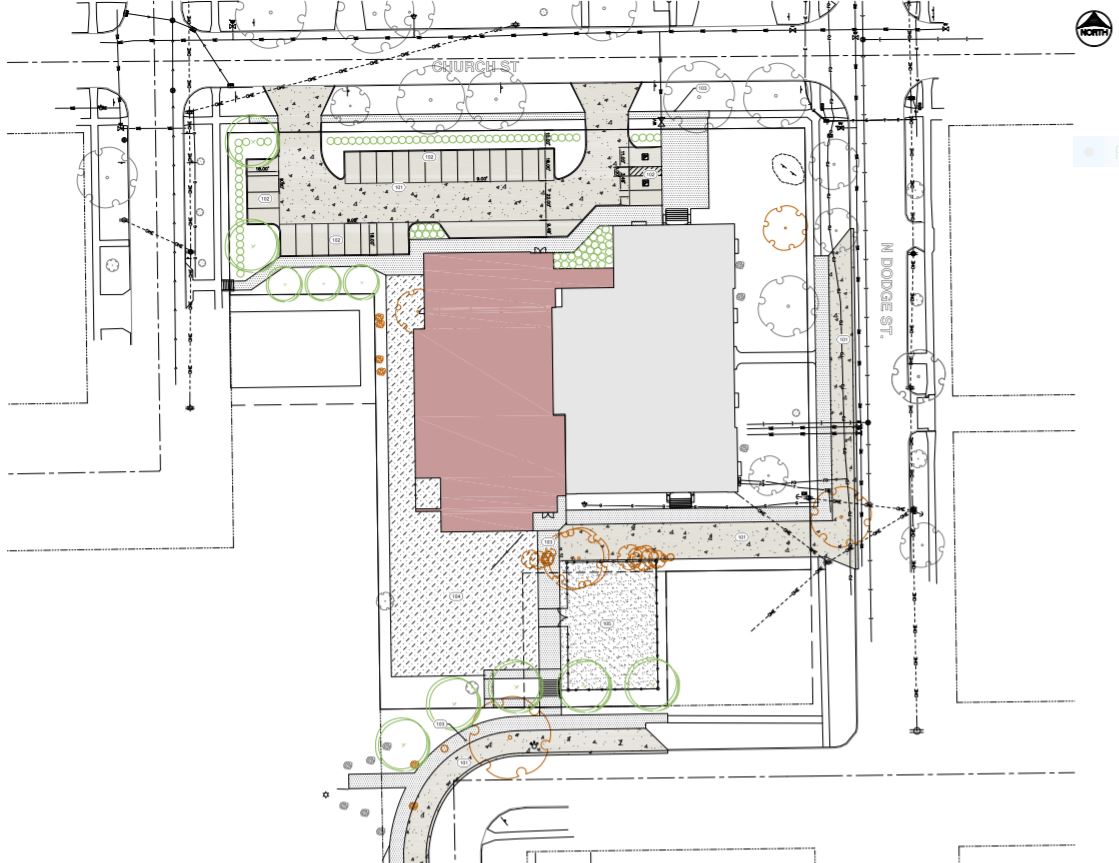
(Click to enlarge)
At tonight’s meeting, the board will consider an initial schematic design proposal for the renovation of Horace Mann Elementary. I was a little surprised to see the proposal, which you can view more fully here. In the proposal, the addition to Mann is 17,440 square feet—much larger than the roughly 10,000 square-foot addition we had talked about earlier this year when we solicited public input. As a result, its placement on the site and its effect on outdoor playground space and traffic flow seems very different from what I would have expected, given my perception of the public feedback we received. Our administrators may have good explanations for these differences tonight, but I’m inclined to think we need to hear more from the public on this design before approving it. Readers—what are your initial thoughts?
Monday, August 21, 2017
School board agenda for August 22
Relatively light agenda this week. Two notable items: A special education update and a design proposal for the renovation of Horace Mann Elementary. The full agenda is here; feel free to chime in with a comment about anything that catches your attention.
Monday, August 14, 2017
School board agenda for August 15
Last week’s meeting was delayed because too many board members were out of town. Here are some of the items on this week’s agenda:
We’ll hear a report about the annual staff climate survey. More information here. (Editorial comment: Does this look like an objective report to you, or like an advertisement?)
We’ll hear a report about lead testing in the district’s school. More information here.
We’ll hear the quarterly financial report.
We’ll once again consider a proposal to create two new classrooms in the existing Penn Elementary School building. I voted against this proposal at our last board meeting, for the reasons I described in a comment on this post. It’s not yet clear to me whether the administration is still proposing to change the listed capacity of Penn if this proposal is adopted.
All that and more! The full agenda is here. Feel free to chime in with a comment about anything that catches your attention.
We’ll hear a report about the annual staff climate survey. More information here. (Editorial comment: Does this look like an objective report to you, or like an advertisement?)
We’ll hear a report about lead testing in the district’s school. More information here.
We’ll hear the quarterly financial report.
We’ll once again consider a proposal to create two new classrooms in the existing Penn Elementary School building. I voted against this proposal at our last board meeting, for the reasons I described in a comment on this post. It’s not yet clear to me whether the administration is still proposing to change the listed capacity of Penn if this proposal is adopted.
All that and more! The full agenda is here. Feel free to chime in with a comment about anything that catches your attention.
Monday, July 24, 2017
The future of Hills Elementary (continued)
What should people make of the board’s omission of Hills Elementary from the bond proposal? A look back at the process can shed some light on that.
At our October work session, our facilities director told the board:
At the same time, the facilities director presented a similar choice to the board about TREC (the former Roosevelt Elementary):
In both cases, the administration told us: If we’re going to do these, let’s do them. In response, the board took both facilities out of the bond-funded seven-year period and put them on the unfunded “future needs” list. Are Hills residents unreasonable to be concerned about the future of their school?
At our October work session, our facilities director told the board:
If we’re going to finish Hills, let’s finish Hills, okay? I mean, it’s an unfinished building. The board made that conscious decision in 2013, in December of 2013, to just do the mandatory code updates, and that’s what we’ve done, but they’re in need of more classrooms, we just set two temporaries, or actually two, two duplexes, there’s four temporary classrooms there, their gym is totally inadequate, there are a lot of things that need to be done at Hills, so I put it on there for discussion. If we’re going to do it, it’s going to take three million to finish it and do it right.So the materials presented for discussion that night showed a $3.2 million Hills project scheduled for completion in 2022. It included a new gym and four new classrooms.
At the same time, the facilities director presented a similar choice to the board about TREC (the former Roosevelt Elementary):
If we’re going to keep that building, which may be another decision for another day, this needs to be moved up [to 2020-21 in the timeline], so that at that point, we’re air-conditioned a hundred percent.By January, though, the picture had changed, for both Hills and TREC. By the time the board settled on a bond proposal, it had decided to put neither facility into the seven-year bond-funded period. In the case of TREC, the explicit administration recommendation was to start looking for new homes for the programs there in anticipation of closing the building.
In both cases, the administration told us: If we’re going to do these, let’s do them. In response, the board took both facilities out of the bond-funded seven-year period and put them on the unfunded “future needs” list. Are Hills residents unreasonable to be concerned about the future of their school?
School board agenda for July 25
Some of the items on this week’s school board agenda:
We’ll discuss and possibly approve the district’s legislative priorities for the next legislative session. Proposal here.
We’ll hear a report about the district’s efforts to teach students about safe and responsible use of social media. Information here.
We’ll hear a report about reading assessment results. The district has been implementing a weighted resource allocation model to shift resources (including classroom teachers) toward schools with larger numbers of students from low-income households, students receiving special education services, and students who are English-language learners. This report will focus in particular on reading assessment results at those schools. Information here.
We’ll hear a report about school climate disparities when it comes to student gender identity and sexual orientation. Information here.
We’ll hear a transportation update, including an update on activities buses at the secondary level and a comparison of busing costs in the 2015-16, 2016-17, and 2017-18 school years. Information here.
We’ll hear an update on the progress at Hoover East and on its use by Longfellow students this coming year (while Longfellow is being renovated). Information here.
All that and more! The full agenda is here. Feel free to chime in with a comment about anything that catches your attention.
UPDATE: The administration came to us at the July 25 meeting asking to hire a contractor to create more rooms out of common space at Penn Elementary to make up for the loss of temporaries (which were relocated elsewhere). We were told that this change would permanently raise Penn’s capacity rating of the building to 683. This was the only option we were presented. It represented a change to the building’s capacity rating under the Facilities Master Plan that would have a lasting effect on how many students the district will expect that building to hold, and it came to us in the form of a consent calendar item just four weeks before school was to start.
Earlier this year, the administration had already revised the Penn building capacity up from 587 to 633, based not an any additional space but just on a reassessment of the building. But the building is still using the same cafeteria it was using when the building capacity was 387. Eight classrooms (200 seats) have been added since, and this project would have added 50 more. I don’t have confidence that that building can comfortably hold 683 students, even with more classrooms added. Moreover, I don’t believe the board should approve a permanent change to a building’s capacity under the Facilities Master Plan without receiving any input from the families at the affected school. I felt that the proposal at the very least should have been brought to the board much sooner, so the affected families could have a chance to comment on it.
I fully understand that the elementary schools in the North Corridor need more capacity—one of the reasons I’m against the bond is because it limits the district’s ability to respond to the expected growth in that area. But new capacity shouldn’t be achieved simply by carving more classrooms out of a building that is already too large for its common spaces. I saw the project as creating a long-term problem to address a short-term problem, so I voted against the contract proposal. The proposal failed by a vote of 3-3.
Three weeks later, the administration brought back the same contract proposal. I moved to adopt the proposal on the condition that the district would not change Penn’s listed capacity number without further board approval. The motion passed 5-1.
We’ll discuss and possibly approve the district’s legislative priorities for the next legislative session. Proposal here.
We’ll hear a report about the district’s efforts to teach students about safe and responsible use of social media. Information here.
We’ll hear a report about reading assessment results. The district has been implementing a weighted resource allocation model to shift resources (including classroom teachers) toward schools with larger numbers of students from low-income households, students receiving special education services, and students who are English-language learners. This report will focus in particular on reading assessment results at those schools. Information here.
We’ll hear a report about school climate disparities when it comes to student gender identity and sexual orientation. Information here.
We’ll hear a transportation update, including an update on activities buses at the secondary level and a comparison of busing costs in the 2015-16, 2016-17, and 2017-18 school years. Information here.
We’ll hear an update on the progress at Hoover East and on its use by Longfellow students this coming year (while Longfellow is being renovated). Information here.
All that and more! The full agenda is here. Feel free to chime in with a comment about anything that catches your attention.
UPDATE: The administration came to us at the July 25 meeting asking to hire a contractor to create more rooms out of common space at Penn Elementary to make up for the loss of temporaries (which were relocated elsewhere). We were told that this change would permanently raise Penn’s capacity rating of the building to 683. This was the only option we were presented. It represented a change to the building’s capacity rating under the Facilities Master Plan that would have a lasting effect on how many students the district will expect that building to hold, and it came to us in the form of a consent calendar item just four weeks before school was to start.
Earlier this year, the administration had already revised the Penn building capacity up from 587 to 633, based not an any additional space but just on a reassessment of the building. But the building is still using the same cafeteria it was using when the building capacity was 387. Eight classrooms (200 seats) have been added since, and this project would have added 50 more. I don’t have confidence that that building can comfortably hold 683 students, even with more classrooms added. Moreover, I don’t believe the board should approve a permanent change to a building’s capacity under the Facilities Master Plan without receiving any input from the families at the affected school. I felt that the proposal at the very least should have been brought to the board much sooner, so the affected families could have a chance to comment on it.
I fully understand that the elementary schools in the North Corridor need more capacity—one of the reasons I’m against the bond is because it limits the district’s ability to respond to the expected growth in that area. But new capacity shouldn’t be achieved simply by carving more classrooms out of a building that is already too large for its common spaces. I saw the project as creating a long-term problem to address a short-term problem, so I voted against the contract proposal. The proposal failed by a vote of 3-3.
Three weeks later, the administration brought back the same contract proposal. I moved to adopt the proposal on the condition that the district would not change Penn’s listed capacity number without further board approval. The motion passed 5-1.
Sunday, July 23, 2017
The future of Hills Elementary
One of the primary themes of the district’s bond proposal is “facilities equity”—the idea that your school facility shouldn’t be so different from those elsewhere in the district that it impacts your child’s educational experience. At the elementary level, this has included the idea that every school ought to have a separate gym and cafeteria, which not all currently do. Because of this emphasis on equity, by the time the bond-funded projects are completed, every elementary school in the district will have a separate gym and cafeteria.
Except one: Hills Elementary. Hills, which has one room that serves both purposes, and which will have eight temporary rooms this year, was conspicuously left out of the bond proposal. Instead, the board majority put Hills on a separate list of “future needs” that are not included in the bond proposal. That list includes an item for adding a gymnasium and art and music rooms to Hills at an estimated cost of $2.5 million.
Our administration has told us that there are only so many projects that the district can run at any given time; that’s why the facilities projects are spread out over years rather than all done simultaneously. So if a project is not included in the bond, which covers all the projects in the facilities plan through 2023-24, there is no reason to think that it can be added to the plan until after 2023-24, even if the funding materializes. And, of course, anything that is not included in the bond proposal could not happen without its own funding source (such as a possible second bond proposal in the future).
Actually, there are two elementary schools in the district that will not have a separate gymnasium and cafeteria by the time the bond-funded projects are completed: Hills Elementary and Hoover Elementary (which, of course, the district is planning to close and tear down). The “future needs” list, where the Hills project now appears, is also where the board put the renovations to TREC (the former Roosevelt Elementary), after the superintendent told us that he’d prefer to close the TREC building and thus hopes to be able to cancel those renovations altogether.
Hoover and Roosevelt are not the company that Hills wants to be in. The Hills community has good reason to worry about the district’s commitment to that school—especially since the district has floated multiple proposals to close Hills in recent years.
Continued here.
Except one: Hills Elementary. Hills, which has one room that serves both purposes, and which will have eight temporary rooms this year, was conspicuously left out of the bond proposal. Instead, the board majority put Hills on a separate list of “future needs” that are not included in the bond proposal. That list includes an item for adding a gymnasium and art and music rooms to Hills at an estimated cost of $2.5 million.
Our administration has told us that there are only so many projects that the district can run at any given time; that’s why the facilities projects are spread out over years rather than all done simultaneously. So if a project is not included in the bond, which covers all the projects in the facilities plan through 2023-24, there is no reason to think that it can be added to the plan until after 2023-24, even if the funding materializes. And, of course, anything that is not included in the bond proposal could not happen without its own funding source (such as a possible second bond proposal in the future).
Actually, there are two elementary schools in the district that will not have a separate gymnasium and cafeteria by the time the bond-funded projects are completed: Hills Elementary and Hoover Elementary (which, of course, the district is planning to close and tear down). The “future needs” list, where the Hills project now appears, is also where the board put the renovations to TREC (the former Roosevelt Elementary), after the superintendent told us that he’d prefer to close the TREC building and thus hopes to be able to cancel those renovations altogether.
Hoover and Roosevelt are not the company that Hills wants to be in. The Hills community has good reason to worry about the district’s commitment to that school—especially since the district has floated multiple proposals to close Hills in recent years.
Continued here.
Subscribe to:
Posts (Atom)