I interrupt this vacation from blogging just to make people aware of a proposal that’s on the board’s work session agenda for tomorrow night. The proposal would change the district’s facilities plan to greatly accelerate the schedule for the bond-funded construction projects. Instead of completing the projects by 2024, the district would complete them all by 2021, and some projects (such as the Tate and Alexander additions) would move from the end of the list to the beginning. You can see the details of the proposal here and in the other documents attached here.
I don’t immediately have an opinion about whether the acceleration is a good idea. Most of the air-conditioning projects were scheduled in the first three years anyway, so it’s not immediately clear to me that the proposal would get us to full air-conditioning any sooner. On the other hand, an accelerated schedule means building capacity additions even sooner than the district otherwise would, when it’s possible that the passage of time would show that enrollment doesn’t justify some of them. (There were at least some bond proponents who suggested that voters shouldn’t worry so much about the questionable capacity additions because the district had the time and the flexibility to change the plan if it needed to.) There may well be financial advantages and disadvantages to acceleration, though I hope the discussion of them is more careful than some of the discussion during the bond campaign. (See this post.) The acceleration would also mean that the full tax impact of the borrowing will occur sooner, and not on the somewhat more phased-in schedule the district identified during the bond campaign.
Whatever its merits, the proposal certainly does raise one question: Was the administration aware, during the bond campaign, that this change would be proposed just a month after the voters approved the bond? Were any board members or candidates aware? If so, why did they wait until after the election to raise it? Much of the debate around the bond proposal focused (reasonably) on the details of the underlying plan and on the degree to which a favorable vote would commit the district to that plan. Some candidates and bond proponents acted like any change to the facilities master plan would be an unthinkable mistake. Knowing that acceleration was possible (and maybe even in the works?) would have been helpful for voters as they were evaluating whether the $191 million bond proposal was worthy of their support. I’m not saying it would have changed the result—I could see it working either way, or having no effect—but why not be candid about it?
In any event, just one month after it seemed like everyone was talking about the bond proposal, virtually no one seems to be aware of a proposal to make significant changes to the underlying plan. So take a look. If you feel strongly about it one way or the other, let the board know—and post a comment here, too, if you’d like.
UPDATE: There’s an item on the agenda of the main meeting (which happens before the work session) asking the board to approve a “preliminary official statement” related to the bond issuance. By all appearances, this preliminary official statement assumes in advance that the board will vote to accelerate the projects. (I say that because the amount listed on the statement, $58.9 million, roughly matches the total of the figures given in the yellow columns here for the initial series of bonds under the accelerated proposal.) That seems like putting the cart before the horse, if the board intends to do any real deliberation over the acceleration proposal.
One thing seems never to change: When the administration proposes something, it always seems to be presented as so immediately urgent that it can’t wait even another two weeks. It seems unlikely that the board will have fully debated the pros and cons of acceleration when it votes on that resolution, or even after the one work session. Nor will it have gotten virtually any public input on the idea. What is the justification for rushing into such a big decision?
Showing posts with label facilities master plan. Show all posts
Showing posts with label facilities master plan. Show all posts
Monday, October 23, 2017

Saturday, September 9, 2017
“Brush-off culture” led to flawed bond plan
I wrote the following opinion piece that appeared in both the Gazette and the Press-Citizen. I have updated it and added links below.
As a school board member, I had hoped to be able to support the district’s facilities bond proposal. I’ve always voted for school bonds in the past, and I publicly supported the 2013 ballot proposition giving the district the initial funding for its facilities improvements. But I’m voting “No” on the proposal that’s on the September 12 ballot.
Many have discussed the substantive problems with the bond plan, which funds capacity expansions that extend seven years out on the timeline, in many cases without any enrollment projections showing a need for them. A more sensible proposal would bond for a couple of years of projects, then reassess capacity needs based on updated projections.
How did we end up with such an enormous proposal? I believe it’s the result of serious problems with the district’s decision-making culture. In short, the district is resistant to any community input that doesn’t support its preconceived conclusions.
This culture has affected many district decisions. For example, it’s at the root of the district’s troubles with special education. Special ed parents had raised concerns about the district’s practices for years, yet the problems were ignored until outside authorities intervened, ordering the district to stop violating the law. An employee who raised concerns about the district’s seclusion enclosures was terminated for insubordination.
A related example arose last year when the board extended the superintendent’s contract and committed to giving him two large pay increases. When the mother of a student in special ed wanted to object to that decision—in a well-reasoned, thoughtful comment—a board member rebuked her and warned her that she could be held liable for defamation. When three board members explained why they opposed the proposal, the superintendent warned them that district policy banned board members from publicly expressing negative judgments of him (though the policy does not prohibit favorable comments).
Administrative proposals have routinely come with one-sided arguments—all pro, no con—and are sometimes presented at the eleventh hour, giving the board little choice but to approve them. When 2,500 residents submitted a legal ballot petition on the demolition of Hoover School, the board rejected it. The district then spent scarce funds defending that decision, only to lose in court.
This same “brush-off culture” characterized the process that led to the bond proposal. The district held elaborate “listening posts” only to disregard the input it received. Many people had legitimate concerns about the size and content of the proposal, but rather than pursue compromise and consensus, bond proponents doubled down on the existing plan, putting an extraordinary seven years of projects into the bond. Anyone who had doubts was either uninformed or not supportive of “the kids.”
Such a closed environment is inevitably liable to capture by well-funded interests. Now we have an enormous bond proposal, with proponents raising huge amounts of campaign money—twenty or thirty times what a typical school board campaign costs—and with the large majority of it from a small handful of banks, developers, and construction interests.
This is the district on its best behavior, with its hand out for $191 million. If it receives that entire spending authority all at once, there will be little reason for it to change its ways.
Good decisions don’t come out of a culture that is so resistant to differing points of view. The bond proposal is one product of that culture, and it shows. The board should come back with a more reasonable proposal next year, and in the meantime should strive to show progress in repairing the district’s broken decision-making culture.
As a school board member, I had hoped to be able to support the district’s facilities bond proposal. I’ve always voted for school bonds in the past, and I publicly supported the 2013 ballot proposition giving the district the initial funding for its facilities improvements. But I’m voting “No” on the proposal that’s on the September 12 ballot.
Many have discussed the substantive problems with the bond plan, which funds capacity expansions that extend seven years out on the timeline, in many cases without any enrollment projections showing a need for them. A more sensible proposal would bond for a couple of years of projects, then reassess capacity needs based on updated projections.
How did we end up with such an enormous proposal? I believe it’s the result of serious problems with the district’s decision-making culture. In short, the district is resistant to any community input that doesn’t support its preconceived conclusions.
This culture has affected many district decisions. For example, it’s at the root of the district’s troubles with special education. Special ed parents had raised concerns about the district’s practices for years, yet the problems were ignored until outside authorities intervened, ordering the district to stop violating the law. An employee who raised concerns about the district’s seclusion enclosures was terminated for insubordination.
A related example arose last year when the board extended the superintendent’s contract and committed to giving him two large pay increases. When the mother of a student in special ed wanted to object to that decision—in a well-reasoned, thoughtful comment—a board member rebuked her and warned her that she could be held liable for defamation. When three board members explained why they opposed the proposal, the superintendent warned them that district policy banned board members from publicly expressing negative judgments of him (though the policy does not prohibit favorable comments).
Administrative proposals have routinely come with one-sided arguments—all pro, no con—and are sometimes presented at the eleventh hour, giving the board little choice but to approve them. When 2,500 residents submitted a legal ballot petition on the demolition of Hoover School, the board rejected it. The district then spent scarce funds defending that decision, only to lose in court.
This same “brush-off culture” characterized the process that led to the bond proposal. The district held elaborate “listening posts” only to disregard the input it received. Many people had legitimate concerns about the size and content of the proposal, but rather than pursue compromise and consensus, bond proponents doubled down on the existing plan, putting an extraordinary seven years of projects into the bond. Anyone who had doubts was either uninformed or not supportive of “the kids.”
Such a closed environment is inevitably liable to capture by well-funded interests. Now we have an enormous bond proposal, with proponents raising huge amounts of campaign money—twenty or thirty times what a typical school board campaign costs—and with the large majority of it from a small handful of banks, developers, and construction interests.
This is the district on its best behavior, with its hand out for $191 million. If it receives that entire spending authority all at once, there will be little reason for it to change its ways.
Good decisions don’t come out of a culture that is so resistant to differing points of view. The bond proposal is one product of that culture, and it shows. The board should come back with a more reasonable proposal next year, and in the meantime should strive to show progress in repairing the district’s broken decision-making culture.
Thursday, September 7, 2017
School district needs to stop breaking the law
The Johnson County district court ruled today that our school board majority acted illegally by refusing to forward the Hoover ballot petition to the County Auditor for placement on the September 12 ballot. The decision is here.
(Emphasis added.) The court ordered the board to forward the petition to the Auditor. What will happen next is not entirely clear. The court decided that it did not have jurisdiction to order the issue placed on the September 12 ballot and that it would be impractical to do so at this point in any event. The September 12 election will go forward with the currently planned ballot.
I’ll update this post later with more details. But please keep in mind: If the board had forwarded the petition to the Auditor as it was legally required to do, this matter would have cost this district and the county nothing other than a bit of ink (since there was an election occurring anyway). How much has the district now spent—from the general fund, which pays for teachers in the classrooms—to defend the board’s illegal action?
Plainly, if the injunction is not granted, the electors and voters, including Plaintiffs, will lose their ability to call to vote and vote upon a matter which the relevant statutes provide to them a right and power to vote. Moreover, their inability to call to vote and vote on the matter would occur despite their proper exercise of the right and power accorded by the relevant statutory provisions.
. . .
Finally, the court finds that the public interest in granting injunctive relief weighs in its favor, particularly in light of the fact that the relevant statutory provisions provide the clear right and power to voters and electors to vote on these matters of public interest.
(Emphasis added.) The court ordered the board to forward the petition to the Auditor. What will happen next is not entirely clear. The court decided that it did not have jurisdiction to order the issue placed on the September 12 ballot and that it would be impractical to do so at this point in any event. The September 12 election will go forward with the currently planned ballot.
I’ll update this post later with more details. But please keep in mind: If the board had forwarded the petition to the Auditor as it was legally required to do, this matter would have cost this district and the county nothing other than a bit of ink (since there was an election occurring anyway). How much has the district now spent—from the general fund, which pays for teachers in the classrooms—to defend the board’s illegal action?
Saturday, September 2, 2017
No more temporaries!—er, never mind
When the district debuted its PowerPoint presentation about the bond, it contained a slide titled “No more Temporaries,” declaring:

It wasn’t long, though, before that slide was deleted from the presentation. Now the presentation promises only the “reduction of temporary classrooms.” Even the district’s own materials have to concede that kids will still be in temporaries after the entire $191 million is spent.
Where is this most likely? First, in the North Corridor. The district’s enrollment projections show virtually no growth in elementary enrollment in the area around Liberty High even ten years out. But in fact, in the time since our demographers made the projections, final platted developments including over two thousand units of housing have been filed in Coralville, as well as a smaller number in North Liberty. Drive around there and you’ll see it happening.
Second, at Alexander Elementary. Alexander is currently using four temporary classrooms and has already converted three interior common spaces into classrooms. And its enrollment is projected to grow. The bond plan gives it a four-classroom addition seven years from now.
Third, Hills Elementary. Hills currently has eight temporary rooms—four being used as classrooms and four as resource rooms. It receives nothing at all from the bond plan.
Is it too much to ask that after spending $191 million on facilities—including on three sets of blue-chip high school athletic facilities—we wouldn’t still have kids in temporary classrooms?

It wasn’t long, though, before that slide was deleted from the presentation. Now the presentation promises only the “reduction of temporary classrooms.” Even the district’s own materials have to concede that kids will still be in temporaries after the entire $191 million is spent.
Where is this most likely? First, in the North Corridor. The district’s enrollment projections show virtually no growth in elementary enrollment in the area around Liberty High even ten years out. But in fact, in the time since our demographers made the projections, final platted developments including over two thousand units of housing have been filed in Coralville, as well as a smaller number in North Liberty. Drive around there and you’ll see it happening.
Second, at Alexander Elementary. Alexander is currently using four temporary classrooms and has already converted three interior common spaces into classrooms. And its enrollment is projected to grow. The bond plan gives it a four-classroom addition seven years from now.
Third, Hills Elementary. Hills currently has eight temporary rooms—four being used as classrooms and four as resource rooms. It receives nothing at all from the bond plan.
Is it too much to ask that after spending $191 million on facilities—including on three sets of blue-chip high school athletic facilities—we wouldn’t still have kids in temporary classrooms?
Thursday, August 31, 2017
September surprise?
I can’t help wondering whether there will be a “September surprise” as the school election approaches on September 12. Two years ago, just five days before the board election, a glossy “City High Preview” appeared on the district’s website, apparently calculated to head off the growing momentum of candidates who questioned the Hoover closure. It came off mostly as a clumsy attempt by the bureaucracy to use public resources to influence the election. But you don’t expect the institution to just sit on its hands, do you?
I was reminded of that incident this week by candidate Janet Godwin’s remarks when asked about keeping neighborhood schools open (full context here):
It’s bad enough when bond proponents act like the facilities master plan is incorporated into the bond ballot language. (It’s not.) It’s even worse when they start discussing “plans” that aren’t even in the FMP. Still, I suppose it’s mildly encouraging that this year’s unsupported assertions focus more on career and tech than on parking and baseball.
UPDATE: Well, that didn’t take long. Right on cue, prominent bond supporter Mary Kate Pilcher Hayek asserts that she has a map showing where career and tech and athletic facilities will go on the City High site.
UPDATE #2: I was naturally curious about this, so I emailed the superintendent:
I was reminded of that incident this week by candidate Janet Godwin’s remarks when asked about keeping neighborhood schools open (full context here):
The thing is that if we are able to expand City High, we’ll be bringing back career tech education to City High. We will be bringing forward automotive, engineering, architectural work, other kinds of construction, engineering, etc. Those sorts of programmings are going to be coming back to City High, and the principal at City High, working with the administration, is already outlining those plans.Reader: There is nothing in the bond proposal, and nothing anywhere in the facilities master plan (FMP), about new career and tech facilities at City High. It’s not even in the September Surprise 2015 City High Preview! During the many board meetings and work sessions leading up to the bond proposal, not a word was spoken about such a plan, though board member Phil Hemingway kept trying to raise the topic of career and tech. The district has made it very clear that it cannot even publicly identify what the Hoover land will be used for. Moreover, any plan to change the City High project to add automotive, engineering, architectural, and construction facilities would almost certainly affect both the project’s price tag and its effect on the building’s capacity rating—which means (in theory, at least!) it couldn’t happen just on the administration’s say-so without formal board action.
It’s bad enough when bond proponents act like the facilities master plan is incorporated into the bond ballot language. (It’s not.) It’s even worse when they start discussing “plans” that aren’t even in the FMP. Still, I suppose it’s mildly encouraging that this year’s unsupported assertions focus more on career and tech than on parking and baseball.
UPDATE: Well, that didn’t take long. Right on cue, prominent bond supporter Mary Kate Pilcher Hayek asserts that she has a map showing where career and tech and athletic facilities will go on the City High site.
UPDATE #2: I was naturally curious about this, so I emailed the superintendent:
Hi, Steve. I notice that Mary Kate Pilcher Hayek says she has a map showing where career and tech and athletics facilities will go on the City High/Hoover property. She seemed to say that it was a district document. Is there such a document? If so, how do I square that with the response you gave me in May saying that the district would not be able to answer that question until after the first series of bonds is issued?His reply:
Thanks for any information,
Chris Liebig
Good Evening Chris
I am unaware of any map with any such designations.
Steve
Friends of Horace Mann
Think about the position the Horace Mann Elementary community is in. They know how important that school is to the north side neighborhood. They want upgrades and renovations to the building—partly because the building needs it, and partly because they fear that without them, the district may close the school. The district itself has instilled that fear in them.
I think it’s a safe bet that the many bond supporters among the Mann community would also have voted “yes” on a smaller bond proposal, and may even have preferred one, as long as it included Mann (which it almost certainly would have). Instead, though, the school board majority chose to tie the Mann project to $180 million worth of other projects, in a plan that extends out seven years, closes an elementary school, includes capacity expansions that aren’t based on any enrollment projections, and yet still manages to make it likely that some parts of the district (e.g., at Alexander and in the North Corridor) will be stuck with temporary classrooms even after all the money is spent. With friends like that, Mann doesn’t need enemies.
But that’s the option that came out of the sausage grinder, and many Mann families would rather have a huge bond that includes Mann than wait for a better proposal next year. One consequence is that many Mann advocates, who admirably want to preserve and renovate an older elementary school in a central core neighborhood of Iowa City, have decided that it’s in their best interest to ally with people who want to close and tear down an older elementary school in a central core neighborhood of Iowa City.
I don’t support this bond proposal, but if many Mann families do, I can at least understand the position they feel they’re in. I wish our district hadn’t put them in that position.
As I wrote about more fully here, I was one of three board members who voted last week to allow three more weeks for community input on the schematic design for the Mann proposal before approving it. We’ve since received about two dozen emails from people on the proposal (which was the whole point of waiting). These emails have been almost uniformly in favor of moving forward with the district’s design proposal.
In the emails, some people specifically argue that the district’s proposal is better than any alternatives. Many of the emails, though, simply say that they want the project to keep moving forward. Some candidly admit that they wish the design proposal were different, but that they prefer keeping the project on track to having meaningful input into the design. Others have apparently been led to believe (possibly by prominent bond supporters) that the three board members voted down the entire Mann project, rather than simply to allow three more weeks for feedback.
I want to see the Mann project happen—I think it’s one of the best projects in the plan—but I know that a lot of people in the Mann community no longer see people like me as allies. The district has needlessly pitted Mann families against many people who support the project but not the larger bond proposal.
The institution’s message to Mann families on the design proposal is the same as its message to them on the bond plan, and the same as its message district-wide: Our job is to decide; your job is to vote “yes” on whatever we decide.
I think it’s a safe bet that the many bond supporters among the Mann community would also have voted “yes” on a smaller bond proposal, and may even have preferred one, as long as it included Mann (which it almost certainly would have). Instead, though, the school board majority chose to tie the Mann project to $180 million worth of other projects, in a plan that extends out seven years, closes an elementary school, includes capacity expansions that aren’t based on any enrollment projections, and yet still manages to make it likely that some parts of the district (e.g., at Alexander and in the North Corridor) will be stuck with temporary classrooms even after all the money is spent. With friends like that, Mann doesn’t need enemies.
But that’s the option that came out of the sausage grinder, and many Mann families would rather have a huge bond that includes Mann than wait for a better proposal next year. One consequence is that many Mann advocates, who admirably want to preserve and renovate an older elementary school in a central core neighborhood of Iowa City, have decided that it’s in their best interest to ally with people who want to close and tear down an older elementary school in a central core neighborhood of Iowa City.
I don’t support this bond proposal, but if many Mann families do, I can at least understand the position they feel they’re in. I wish our district hadn’t put them in that position.
As I wrote about more fully here, I was one of three board members who voted last week to allow three more weeks for community input on the schematic design for the Mann proposal before approving it. We’ve since received about two dozen emails from people on the proposal (which was the whole point of waiting). These emails have been almost uniformly in favor of moving forward with the district’s design proposal.
In the emails, some people specifically argue that the district’s proposal is better than any alternatives. Many of the emails, though, simply say that they want the project to keep moving forward. Some candidly admit that they wish the design proposal were different, but that they prefer keeping the project on track to having meaningful input into the design. Others have apparently been led to believe (possibly by prominent bond supporters) that the three board members voted down the entire Mann project, rather than simply to allow three more weeks for feedback.
I want to see the Mann project happen—I think it’s one of the best projects in the plan—but I know that a lot of people in the Mann community no longer see people like me as allies. The district has needlessly pitted Mann families against many people who support the project but not the larger bond proposal.
The institution’s message to Mann families on the design proposal is the same as its message to them on the bond plan, and the same as its message district-wide: Our job is to decide; your job is to vote “yes” on whatever we decide.
Radical ideas
Bond proponents are working hard to convince people that the district would never close a school right after investing a lot of money into it. That’s a bit of an uphill battle, given that the school board chose to invest almost $1 million on air conditioning and upgrades at Hoover after it decided to close the school. More importantly, we all know general fund money is tight. If we end up with significantly more capacity than we have students, it’s perfectly reasonable to expect more closure arguments: “Why pay to run twenty-one schools when all the kids will fit into eighteen or nineteen or twenty?” Ask any district where enrollment has fallen well below capacity. It’s especially reasonable to expect those arguments when some of our own administrators have been making them for years.
On the latter point, an interesting exchange occurred as the board started discussing possible revisions to the facilities plan last October. Board member Lori Roetlin asked whether it would make sense to build a pre-school center on available land in North Liberty, which would enable the district to expand preschool enrollment while also freeing up space currently being used for preschool in nearby elementary schools.
(Full recording here.)
The superintendent made it very clear that he was talking about decisions the board would make before settling on bond ballot language, and the board did not end up including any projects in the plan that would repurpose elementary buildings into preschool buildings. But it’s also true that the board ended up adopting very broad ballot language, and the district has changed its tune on whether we’re “locked into” a particular plan. I know of nothing that would prevent the district, after bond passage, from repurposing an elementary school into a preschool center or a new home for the programs at TREC, and potentially altering the listed projects accordingly, if a future board was so inclined.
We’ve seen over time (and even over the past few board meetings) that our facilities director has a very big say in the district’s plans for its buildings. For that reason, it would have been nice to hear his ideas about the right way to find space for pre-school. If he thinks it should happen, voters could reasonably conclude that there’s a good chance it will happen.
In any event, it’s natural to wonder, from the conversations the district has had for years, whether the future will bring more proposals to close or re-purpose existing elementary schools (especially if we do end up with hundreds more seats than we have students). And maybe people will even be persuaded that it’s a good idea! But we shouldn’t pretend that it’s somehow precluded by passage of the bond.
On the latter point, an interesting exchange occurred as the board started discussing possible revisions to the facilities plan last October. Board member Lori Roetlin asked whether it would make sense to build a pre-school center on available land in North Liberty, which would enable the district to expand preschool enrollment while also freeing up space currently being used for preschool in nearby elementary schools.
Director Roetlin: I just want to throw that out there, that there would be some efficiencies in doing that.
Facilities director Van Hemert: Yeah. Can I share my radical idea?
Superintendent Murley: No.
[Laughter]
Murley: Take care of that right now. It’s nine o’clock, quarter to nine. Yeah, that actually—there’s a lot of efficiencies to running a pre-K building, and we’ve actually talked about, there are advantages to considering different places in the district, just because of the transition issues that people have. If you work downtown, you’re not going to want to drive to North Liberty, so we might need a pre-K center up there, a pre-K center down here, and we’ve got some existing facilities that could serve that capacity if we were to move out, and do some changes to the plan and add new facilities in other places in order to take advantage of the some of the space we have right now.
. . .
So I think that’s the conversation we need to have between now and December, because one of the things—and Craig said this when we started out—the difference between the work that we’re doing right now, and the work that we’re proposing doing in the future, is we’ve got the ability now to take a look at what we’re doing and say, Ah, we’d like to change it. And we can do that. Once we pass the bond, we can’t do that. Now we’re locked into doing the things that we said we were going to do.
(Full recording here.)
The superintendent made it very clear that he was talking about decisions the board would make before settling on bond ballot language, and the board did not end up including any projects in the plan that would repurpose elementary buildings into preschool buildings. But it’s also true that the board ended up adopting very broad ballot language, and the district has changed its tune on whether we’re “locked into” a particular plan. I know of nothing that would prevent the district, after bond passage, from repurposing an elementary school into a preschool center or a new home for the programs at TREC, and potentially altering the listed projects accordingly, if a future board was so inclined.
We’ve seen over time (and even over the past few board meetings) that our facilities director has a very big say in the district’s plans for its buildings. For that reason, it would have been nice to hear his ideas about the right way to find space for pre-school. If he thinks it should happen, voters could reasonably conclude that there’s a good chance it will happen.
In any event, it’s natural to wonder, from the conversations the district has had for years, whether the future will bring more proposals to close or re-purpose existing elementary schools (especially if we do end up with hundreds more seats than we have students). And maybe people will even be persuaded that it’s a good idea! But we shouldn’t pretend that it’s somehow precluded by passage of the bond.
Wednesday, August 30, 2017
Wait, wait, wait—now hurry up!
Bond proponents have argued that even though the plan may be flawed, it’s important to approve it anyway because otherwise important projects will be delayed. It’s important to remember, though, that the district could easily have chosen to go to the voters last year, or even earlier, for approval of a bond. (I suggested it!) Then if it had failed, there would have been time to develop a better proposal without interrupting the timeline.
Instead, the board majority waited until the latest possible opportunity to put the question on the ballot—and now they’re using this self-created urgency to pressure people into voting Yes. I don’t blame voters if they don’t react well to being manipulated in this way.
Instead, the board majority waited until the latest possible opportunity to put the question on the ballot—and now they’re using this self-created urgency to pressure people into voting Yes. I don’t blame voters if they don’t react well to being manipulated in this way.
Who decides? (part three)
I’ve been writing about the tension between administrative control and elected board control of school decisions. Another example involves the schematic design plan for the renovation of Horace Mann Elementary.
The Mann renovation is part of the district’s facilities master plan. At several meetings earlier this year, the board discussed the development of a design for the plan. Mann is on a very small site adjoining a public park in the middle of a residential neighborhood; there was a lot of community interest in just how we would go about putting a very large addition onto the building.
The board decided to hold a community meeting at Mann to get community input. Between eighty and a hundred people showed up. The district brought some initial design scenarios. Now, I understand that it’s sometimes hard to know how to gauge “community sentiment” from attending a listening post: the room is never of one monolithic viewpoint. But I think it’s fair to say that there was significant sentiment at the listening post for a different balance between outdoor play space, on-site parking, and building placement than that of the district’s own scenarios, or at least for some creative thinking in that direction. I don’t recall anyone suggesting that the addition to the building be made larger; if anything, people wondered if we could create more outdoor play space if the addition were a little smaller.
That was in May. Then, at our meeting last week, the administration presented a schematic design proposal for Mann. What did it look like? Pretty much just like the one the district brought to the community meeting, except with a larger addition. The only apparent effect of the community meeting was to spur the administration to rehearse more extended arguments in favor of its own preferred idea.
Few people were aware that the item was on the agenda. The one community commenter on the issue complained that the district had not followed through on its promises to meet with him and to update him on the progress of the design and had ignored the community input it sought. (Watch his comment here.)
Given the circumstances, three board members (including me) were unwilling to approve the schematic design unless there was additional time for community members to chime in. The board chair immediately raised the prospect that any delay could delay the project. (Yet at the previous meeting, we were at the same step on the Lincoln project, which has the same completion date, and we were told that we could always change the design later.) Ultimately the board put the item on our next meeting agenda. Our administrators all but explicitly said that they’d make sure we received community feedback favoring the proposal in the meantime.
In sum: After we sought community feedback, the administration presented us with a proposal that did not reflect that feedback, and then explained that if the board didn’t approve it, the project could be delayed. Assuming the board approves it under those circumstances, who really decided the issue?
The Mann renovation is part of the district’s facilities master plan. At several meetings earlier this year, the board discussed the development of a design for the plan. Mann is on a very small site adjoining a public park in the middle of a residential neighborhood; there was a lot of community interest in just how we would go about putting a very large addition onto the building.
The board decided to hold a community meeting at Mann to get community input. Between eighty and a hundred people showed up. The district brought some initial design scenarios. Now, I understand that it’s sometimes hard to know how to gauge “community sentiment” from attending a listening post: the room is never of one monolithic viewpoint. But I think it’s fair to say that there was significant sentiment at the listening post for a different balance between outdoor play space, on-site parking, and building placement than that of the district’s own scenarios, or at least for some creative thinking in that direction. I don’t recall anyone suggesting that the addition to the building be made larger; if anything, people wondered if we could create more outdoor play space if the addition were a little smaller.
That was in May. Then, at our meeting last week, the administration presented a schematic design proposal for Mann. What did it look like? Pretty much just like the one the district brought to the community meeting, except with a larger addition. The only apparent effect of the community meeting was to spur the administration to rehearse more extended arguments in favor of its own preferred idea.
Few people were aware that the item was on the agenda. The one community commenter on the issue complained that the district had not followed through on its promises to meet with him and to update him on the progress of the design and had ignored the community input it sought. (Watch his comment here.)
Given the circumstances, three board members (including me) were unwilling to approve the schematic design unless there was additional time for community members to chime in. The board chair immediately raised the prospect that any delay could delay the project. (Yet at the previous meeting, we were at the same step on the Lincoln project, which has the same completion date, and we were told that we could always change the design later.) Ultimately the board put the item on our next meeting agenda. Our administrators all but explicitly said that they’d make sure we received community feedback favoring the proposal in the meantime.
In sum: After we sought community feedback, the administration presented us with a proposal that did not reflect that feedback, and then explained that if the board didn’t approve it, the project could be delayed. Assuming the board approves it under those circumstances, who really decided the issue?
Tuesday, August 29, 2017
Who decides? (part two)
In my previous post, I wrote about how a large bureaucratic institution is a force of its own and naturally wants to run itself. The job of the elected board is to ensure that the decisions belong ultimately to the larger community, not just to the institution itself.
Here’s another recent anecdote. Two meetings ago, the administration presented the board with a schematic design proposal for the renovation of Lincoln School. The renovation itself had already been incorporated into the district’s facilities plan; we were at the step of the process where the board approves preliminary floor plans and preliminary budget projections.
Our facilities director put on an extensive presentation of the proposed schematic design, noting at the end, “Currently, this is over budget.”
“How far over budget?” two board members asked simultaneously.
“I would say as much as thirty or forty percent,” the facilities director said.
This, unsurprisingly, caused some concern among the board members. (Listen to board member Lori Roetlin’s concerns here.) But the board decided to approve the schematic design on the understanding that we would still have to consider, at one of the next steps, whether we were comfortable with a project that would be that far over the initial budget. The facilities director reassured us that there were two more approval steps before the design itself would be final.
Yet the following week, as we were discussing the same step of the planned Mann renovation, the facilities director raised the concern that rejecting the schematic design could end up causing a delay in the completion date. Was that true of the Lincoln project, too, I asked? The facilities director replied that going back for a new schematic design could risk a delay.
In sum: The administration presented the board with a proposal that was 30 to 40% over budget, and then explained that if the board didn’t approve it, the project could be delayed. If the board approves the proposal in those circumstances, who really decided the issue?
Part three here.
Here’s another recent anecdote. Two meetings ago, the administration presented the board with a schematic design proposal for the renovation of Lincoln School. The renovation itself had already been incorporated into the district’s facilities plan; we were at the step of the process where the board approves preliminary floor plans and preliminary budget projections.
Our facilities director put on an extensive presentation of the proposed schematic design, noting at the end, “Currently, this is over budget.”
“How far over budget?” two board members asked simultaneously.
“I would say as much as thirty or forty percent,” the facilities director said.
This, unsurprisingly, caused some concern among the board members. (Listen to board member Lori Roetlin’s concerns here.) But the board decided to approve the schematic design on the understanding that we would still have to consider, at one of the next steps, whether we were comfortable with a project that would be that far over the initial budget. The facilities director reassured us that there were two more approval steps before the design itself would be final.
Yet the following week, as we were discussing the same step of the planned Mann renovation, the facilities director raised the concern that rejecting the schematic design could end up causing a delay in the completion date. Was that true of the Lincoln project, too, I asked? The facilities director replied that going back for a new schematic design could risk a delay.
In sum: The administration presented the board with a proposal that was 30 to 40% over budget, and then explained that if the board didn’t approve it, the project could be delayed. If the board approves the proposal in those circumstances, who really decided the issue?
Part three here.
Monday, August 28, 2017
Who decides? (part one)
In any truly public school system, the institution has to answer to the democratically elected school board. That’s the theory. In practice, an institution naturally wants to run itself without interference, and sometimes chafes at the supervision of an elected board. The board, after all, represents everyone in the district, and sometimes the desires of the larger community don’t perfectly coincide with the preferences that win out within the institution. Part of the board’s job—a particularly important part—is to make sure that it controls the institution and not the other way around.
One recent illustration of this tension involved the construction of new classrooms from interior common space at Penn Elementary. The administration asked us to approve a contract with an outside company for part of the work. The proposal (described here) came before the board on July 25—just four weeks before school was to start. The administration told us that the project would raise Penn’s listed capacity by fifty students—from 633 to 683.
I voted against the proposal because I was against permanently raising Penn’s capacity number when it still has the same cafeteria space that it had when the district considered it to be a 387-student school. (I explain my reasons more fully here.) The proposal failed on a vote of 3-3.
Three weeks later, the administration brought back the same contract proposal. At this meeting, however, it came to light that the district’s contractors (as well as district staff) had continued working in Penn even after the board voted down the contract. This naturally raised serious concerns: Did the administration move ahead with a contract even after the board had rejected it?
When I asked about why the contractor had continued working after the board voted down the contract, the facilities director and the superintendent gave what struck me as two somewhat different explanations. (You can listen to the exchange here; the superintendent later clarified his response here.)
In any event, school was about to start, and Penn needed some (at least temporary) space. I moved to approve the proposal on the condition that the project would not raise Penn’s listed capacity number and that any increase in Penn’s capacity would require board approval. The motion passed 5-1.
The next day, a member of the public emailed the superintendent, asking what the district now considered Penn’s capacity to be. Late last week, he forwarded her the response of the district’s facilities department: 658.
Part two here.
One recent illustration of this tension involved the construction of new classrooms from interior common space at Penn Elementary. The administration asked us to approve a contract with an outside company for part of the work. The proposal (described here) came before the board on July 25—just four weeks before school was to start. The administration told us that the project would raise Penn’s listed capacity by fifty students—from 633 to 683.
I voted against the proposal because I was against permanently raising Penn’s capacity number when it still has the same cafeteria space that it had when the district considered it to be a 387-student school. (I explain my reasons more fully here.) The proposal failed on a vote of 3-3.
Three weeks later, the administration brought back the same contract proposal. At this meeting, however, it came to light that the district’s contractors (as well as district staff) had continued working in Penn even after the board voted down the contract. This naturally raised serious concerns: Did the administration move ahead with a contract even after the board had rejected it?
When I asked about why the contractor had continued working after the board voted down the contract, the facilities director and the superintendent gave what struck me as two somewhat different explanations. (You can listen to the exchange here; the superintendent later clarified his response here.)
In any event, school was about to start, and Penn needed some (at least temporary) space. I moved to approve the proposal on the condition that the project would not raise Penn’s listed capacity number and that any increase in Penn’s capacity would require board approval. The motion passed 5-1.
The next day, a member of the public emailed the superintendent, asking what the district now considered Penn’s capacity to be. Late last week, he forwarded her the response of the district’s facilities department: 658.
Part two here.
Thursday, August 24, 2017
Is the district honest about community input?

“Keep it simple” because “the details get complicated.” In its bond presentation, the district presents that idea as summing up the feedback that we received at our community listening posts on the facilities plan and the bond. In fact, listen to the recordings: the district cherry-picked one person’s comment and presented it as the summary of feedback at three listening posts.
According to bond proponents (example here), those same listening posts showed “unified support” for putting seven years’ worth of projects into the bond proposal, resulting in the very high $191 million price tag. But take a look at the minutes of those listening posts (here, here, and here). Listen to the recordings. Is that assertion even remotely true? In fact, at two of the three listening posts, the tables weren’t even surveyed about how much of the plan should go into the bond. And to the extent there was discussion of the issue, the feedback was mixed, as even the minutes show. Or listen, for example, to what this man had to say. Somehow that wasn’t the comment cherry-picked for the PowerPoint slide. Unified support?
“Stick to the plan”? “We have a great plan”? “Just do it”? Read the minutes.
The district appears unable to resist the temptation to promote its desired conclusions by distorting the public input it receives. In 2013, for example, the district held community workshops on the development of the facilities master plan. At the final workshop—attended by hundreds of people—seventy-four percent of attendees supported plans that did not close Hoover Elementary School. (See also charts here and here.) Yet when the facilities committee presented its proposal to the school board, it stated that closing Hoover was a “common theme” of the feedback it received.
Proponents of the bond have repeatedly argued that the plan is the result of input from countless members of the public. But it’s easy to assert that the community input supports your point of view; after all, who’s going to go to the trouble of verifying the assertion? Given the examples above, though, I recommend you start asking for evidence.
Wednesday, August 23, 2017
Inflation and “keep it simple”
One of the themes we’ve heard from the district in its presentation of materials on the bond is “keep it simple,” because “the details get complicated.” (That particular slide attributes this sentiment to the listening posts we held earlier this year, but I attended all of those listening posts, and the only person who I remember saying “keep it simple” was the school board chair.) The “keep it simple” spirit is reflected in the district’s discussion of the issue of inflation. The district’s bond FAQ says:
No, because inflation affects both revenues and expenditures. That’s why we don’t all sit around kicking ourselves for not having bought all our possessions in 1971—I mean, look at how much cheaper everything was! But of course, our paychecks were much smaller, too.
The district emphasizes the risk of inflation on the expenditure side, but conveniently ignores it on the revenue side. In that same FAQ, the district asserts that the effect of the bond on the tax rate “could decrease over time as the property tax base in the District continues to grow.” At our work sessions, it was emphasized that we should feel reassured about the tax rate because our tax base will grow at a rate of 4 or 5% annually. But not all of the growth in that number is attributable to growth in the amount of taxable property; some portion of it is simply inflation at work over time.
It’s a bit disingenuous to tell residents, “Don’t worry, the tax rate won’t be as high as it looks,” without adding, “Of course, that’s partly because your home’s assessment will go up.” It’s even more disingenuous to do that while simultaneously warning them about the effect of inflation on project costs.
And will interest rates rise? I don’t pretend to know, but I know that since 2008 many dire predictions about inflation and increasing interest rates have not been borne out (though they have often served people’s political purposes). For a counterpoint on interest rates, see here, here, and here.
Will local construction inflation outpace inflation in home values to an extent that will cost us money? Will inflation be offset by possible cost savings of scaling back projects that may not be necessary? The details get complicated! Does the district’s presentation of these issues show sufficient respect for the complexity of the issue and for the voters’ intelligence? Judge for yourself.
To delay the remaining projects in the Facilities Master Plan will be expensive.To get the inflation “cost,” the district has apparently just multiplied the bottom line total ($191.5 million) by possible inflation rates. Is this an accurate way to discuss the cost of inflation?
- Construction inflation is running at 3-5%. A one-year delay would increase the total plan costs as much as $5.6M - $9.4M dollars!
- Borrowing interest rates continue to rise. A one-half percent increase in the interest rate will increase borrowing costs in excess of $11M dollars.
No, because inflation affects both revenues and expenditures. That’s why we don’t all sit around kicking ourselves for not having bought all our possessions in 1971—I mean, look at how much cheaper everything was! But of course, our paychecks were much smaller, too.
The district emphasizes the risk of inflation on the expenditure side, but conveniently ignores it on the revenue side. In that same FAQ, the district asserts that the effect of the bond on the tax rate “could decrease over time as the property tax base in the District continues to grow.” At our work sessions, it was emphasized that we should feel reassured about the tax rate because our tax base will grow at a rate of 4 or 5% annually. But not all of the growth in that number is attributable to growth in the amount of taxable property; some portion of it is simply inflation at work over time.
It’s a bit disingenuous to tell residents, “Don’t worry, the tax rate won’t be as high as it looks,” without adding, “Of course, that’s partly because your home’s assessment will go up.” It’s even more disingenuous to do that while simultaneously warning them about the effect of inflation on project costs.
And will interest rates rise? I don’t pretend to know, but I know that since 2008 many dire predictions about inflation and increasing interest rates have not been borne out (though they have often served people’s political purposes). For a counterpoint on interest rates, see here, here, and here.
Will local construction inflation outpace inflation in home values to an extent that will cost us money? Will inflation be offset by possible cost savings of scaling back projects that may not be necessary? The details get complicated! Does the district’s presentation of these issues show sufficient respect for the complexity of the issue and for the voters’ intelligence? Judge for yourself.
Tuesday, August 22, 2017
A few quick thoughts on the Horace Mann design
(Click to enlarge)
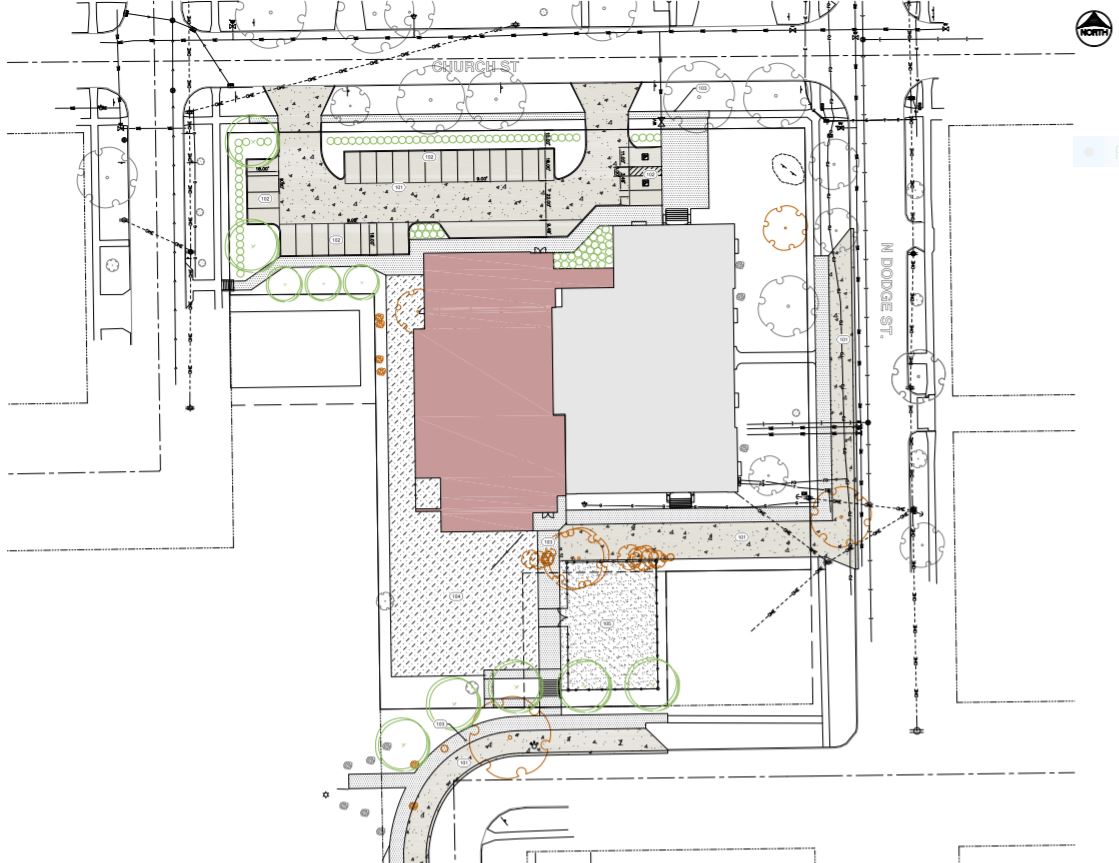
At tonight’s meeting, the board will consider an initial schematic design proposal for the renovation of Horace Mann Elementary. I was a little surprised to see the proposal, which you can view more fully here. In the proposal, the addition to Mann is 17,440 square feet—much larger than the roughly 10,000 square-foot addition we had talked about earlier this year when we solicited public input. As a result, its placement on the site and its effect on outdoor playground space and traffic flow seems very different from what I would have expected, given my perception of the public feedback we received. Our administrators may have good explanations for these differences tonight, but I’m inclined to think we need to hear more from the public on this design before approving it. Readers—what are your initial thoughts?
Monday, August 21, 2017
School board agenda for August 22
Relatively light agenda this week. Two notable items: A special education update and a design proposal for the renovation of Horace Mann Elementary. The full agenda is here; feel free to chime in with a comment about anything that catches your attention.
Monday, August 14, 2017
School board agenda for August 15
Last week’s meeting was delayed because too many board members were out of town. Here are some of the items on this week’s agenda:
We’ll hear a report about the annual staff climate survey. More information here. (Editorial comment: Does this look like an objective report to you, or like an advertisement?)
We’ll hear a report about lead testing in the district’s school. More information here.
We’ll hear the quarterly financial report.
We’ll once again consider a proposal to create two new classrooms in the existing Penn Elementary School building. I voted against this proposal at our last board meeting, for the reasons I described in a comment on this post. It’s not yet clear to me whether the administration is still proposing to change the listed capacity of Penn if this proposal is adopted.
All that and more! The full agenda is here. Feel free to chime in with a comment about anything that catches your attention.
We’ll hear a report about the annual staff climate survey. More information here. (Editorial comment: Does this look like an objective report to you, or like an advertisement?)
We’ll hear a report about lead testing in the district’s school. More information here.
We’ll hear the quarterly financial report.
We’ll once again consider a proposal to create two new classrooms in the existing Penn Elementary School building. I voted against this proposal at our last board meeting, for the reasons I described in a comment on this post. It’s not yet clear to me whether the administration is still proposing to change the listed capacity of Penn if this proposal is adopted.
All that and more! The full agenda is here. Feel free to chime in with a comment about anything that catches your attention.
Monday, July 24, 2017
The future of Hills Elementary (continued)
What should people make of the board’s omission of Hills Elementary from the bond proposal? A look back at the process can shed some light on that.
At our October work session, our facilities director told the board:
At the same time, the facilities director presented a similar choice to the board about TREC (the former Roosevelt Elementary):
In both cases, the administration told us: If we’re going to do these, let’s do them. In response, the board took both facilities out of the bond-funded seven-year period and put them on the unfunded “future needs” list. Are Hills residents unreasonable to be concerned about the future of their school?
At our October work session, our facilities director told the board:
If we’re going to finish Hills, let’s finish Hills, okay? I mean, it’s an unfinished building. The board made that conscious decision in 2013, in December of 2013, to just do the mandatory code updates, and that’s what we’ve done, but they’re in need of more classrooms, we just set two temporaries, or actually two, two duplexes, there’s four temporary classrooms there, their gym is totally inadequate, there are a lot of things that need to be done at Hills, so I put it on there for discussion. If we’re going to do it, it’s going to take three million to finish it and do it right.So the materials presented for discussion that night showed a $3.2 million Hills project scheduled for completion in 2022. It included a new gym and four new classrooms.
At the same time, the facilities director presented a similar choice to the board about TREC (the former Roosevelt Elementary):
If we’re going to keep that building, which may be another decision for another day, this needs to be moved up [to 2020-21 in the timeline], so that at that point, we’re air-conditioned a hundred percent.By January, though, the picture had changed, for both Hills and TREC. By the time the board settled on a bond proposal, it had decided to put neither facility into the seven-year bond-funded period. In the case of TREC, the explicit administration recommendation was to start looking for new homes for the programs there in anticipation of closing the building.
In both cases, the administration told us: If we’re going to do these, let’s do them. In response, the board took both facilities out of the bond-funded seven-year period and put them on the unfunded “future needs” list. Are Hills residents unreasonable to be concerned about the future of their school?
Sunday, July 23, 2017
The future of Hills Elementary
One of the primary themes of the district’s bond proposal is “facilities equity”—the idea that your school facility shouldn’t be so different from those elsewhere in the district that it impacts your child’s educational experience. At the elementary level, this has included the idea that every school ought to have a separate gym and cafeteria, which not all currently do. Because of this emphasis on equity, by the time the bond-funded projects are completed, every elementary school in the district will have a separate gym and cafeteria.
Except one: Hills Elementary. Hills, which has one room that serves both purposes, and which will have eight temporary rooms this year, was conspicuously left out of the bond proposal. Instead, the board majority put Hills on a separate list of “future needs” that are not included in the bond proposal. That list includes an item for adding a gymnasium and art and music rooms to Hills at an estimated cost of $2.5 million.
Our administration has told us that there are only so many projects that the district can run at any given time; that’s why the facilities projects are spread out over years rather than all done simultaneously. So if a project is not included in the bond, which covers all the projects in the facilities plan through 2023-24, there is no reason to think that it can be added to the plan until after 2023-24, even if the funding materializes. And, of course, anything that is not included in the bond proposal could not happen without its own funding source (such as a possible second bond proposal in the future).
Actually, there are two elementary schools in the district that will not have a separate gymnasium and cafeteria by the time the bond-funded projects are completed: Hills Elementary and Hoover Elementary (which, of course, the district is planning to close and tear down). The “future needs” list, where the Hills project now appears, is also where the board put the renovations to TREC (the former Roosevelt Elementary), after the superintendent told us that he’d prefer to close the TREC building and thus hopes to be able to cancel those renovations altogether.
Hoover and Roosevelt are not the company that Hills wants to be in. The Hills community has good reason to worry about the district’s commitment to that school—especially since the district has floated multiple proposals to close Hills in recent years.
Continued here.
Except one: Hills Elementary. Hills, which has one room that serves both purposes, and which will have eight temporary rooms this year, was conspicuously left out of the bond proposal. Instead, the board majority put Hills on a separate list of “future needs” that are not included in the bond proposal. That list includes an item for adding a gymnasium and art and music rooms to Hills at an estimated cost of $2.5 million.
Our administration has told us that there are only so many projects that the district can run at any given time; that’s why the facilities projects are spread out over years rather than all done simultaneously. So if a project is not included in the bond, which covers all the projects in the facilities plan through 2023-24, there is no reason to think that it can be added to the plan until after 2023-24, even if the funding materializes. And, of course, anything that is not included in the bond proposal could not happen without its own funding source (such as a possible second bond proposal in the future).
Actually, there are two elementary schools in the district that will not have a separate gymnasium and cafeteria by the time the bond-funded projects are completed: Hills Elementary and Hoover Elementary (which, of course, the district is planning to close and tear down). The “future needs” list, where the Hills project now appears, is also where the board put the renovations to TREC (the former Roosevelt Elementary), after the superintendent told us that he’d prefer to close the TREC building and thus hopes to be able to cancel those renovations altogether.
Hoover and Roosevelt are not the company that Hills wants to be in. The Hills community has good reason to worry about the district’s commitment to that school—especially since the district has floated multiple proposals to close Hills in recent years.
Continued here.
Mixed messages, part 11
(Part 10 is here.)
I think the district’s inconsistent statements about the effect of bond passage are at least partly responsible for the fact that members of the public seem to hold different understandings of the issue. For example, when I tweeted the article about the Minnesota school district that closed schools after telling voters it would renovate them, I quickly heard from one bond supporter who told me that “In Iowa the bond language is a legal document that cannot be altered after the fact by any admin or board,” and from another who told me that “It was clearly [our] board’s intent to have flexibility.”
Moreover, even if voters discount the district’s more enthusiastic statements (“A GO bond locks in the plan!”), they still do not have clear statements of the district’s position on several important questions, such as:
Even if the district’s answer were “we don’t know, because the law is unclear,” that in itself would be informative. Readers: Maybe one of you will have more success in getting publicly shareable responses to those questions than I have. (I don’t feel free, as an individual board member, to share information that has come to the board in the form of advice from the district’s counsel.)
Finally: What is the cumulative effect of the district’s statements on this issue over the last nine months? Is the district being sufficiently candid? Is it being sufficiently careful about the public expectations that it’s generating? Do its statements, collectively, make you more confident that the district will treat the public respectfully as it moves forward after bond passage? Do they make you more willing to entrust the district with $191 million?
I think the district’s inconsistent statements about the effect of bond passage are at least partly responsible for the fact that members of the public seem to hold different understandings of the issue. For example, when I tweeted the article about the Minnesota school district that closed schools after telling voters it would renovate them, I quickly heard from one bond supporter who told me that “In Iowa the bond language is a legal document that cannot be altered after the fact by any admin or board,” and from another who told me that “It was clearly [our] board’s intent to have flexibility.”
Moreover, even if voters discount the district’s more enthusiastic statements (“A GO bond locks in the plan!”), they still do not have clear statements of the district’s position on several important questions, such as:
- After the bond passes, can the district completely drop a project from the list of projects in the ballot language?
- The governing statute says that if the voters pass the proposal, the district “shall issue” the bonds. Does that mean that if the bond passes, the district is legally required to issue bonds in the stated total amount ($191 million), even if it might have some freedom to reallocate the money among the listed projects?
- Does it mean that the district would have to issue the full amount of bonds, even if the legislature extends the SAVE sales tax before we need the money? (The current SAVE statute allows districts to pay off bonds with the sales tax revenue, but there could be significant transactions costs if we’re required to issue all the bonds first.)
Even if the district’s answer were “we don’t know, because the law is unclear,” that in itself would be informative. Readers: Maybe one of you will have more success in getting publicly shareable responses to those questions than I have. (I don’t feel free, as an individual board member, to share information that has come to the board in the form of advice from the district’s counsel.)
Finally: What is the cumulative effect of the district’s statements on this issue over the last nine months? Is the district being sufficiently candid? Is it being sufficiently careful about the public expectations that it’s generating? Do its statements, collectively, make you more confident that the district will treat the public respectfully as it moves forward after bond passage? Do they make you more willing to entrust the district with $191 million?
Mixed messages, part 10
(Part 9 is here.)
It may well be true that the broad, general ballot language gives the district great legal leeway to alter the planned projects after the bond passes. That may even be for the best (though it would be less necessary if the bond plan didn’t extend out so many years). But if that’s the district’s position, shouldn’t it be trying hard not to raise any expectations to the contrary?
But the district is not only including inconsistent messages about the issue in its bond information, it is widely disseminating detailed descriptions of the projects that are planned for each school (example here)—none of which say anything about being subject to change or about how little they are reflected in the ballot language. Here, for example, is how the descriptions are introduced:

If people are enticed into voting for the bond by these detailed project descriptions, how easy will it be politically to change course later on, if the projects turn out to be unnecessary? Will it be enough to point out the disclaimers that appeared in some parts of the FAQ? By sacrificing candor now to generate support, isn’t the district needlessly laying the groundwork for future conflict?
A more frank presentation of the district’s stance, though, would invite a discussion about whether voters should trust the district to implement the plan in a way that makes sense and is based on real needs.
Continued in part 11.
It may well be true that the broad, general ballot language gives the district great legal leeway to alter the planned projects after the bond passes. That may even be for the best (though it would be less necessary if the bond plan didn’t extend out so many years). But if that’s the district’s position, shouldn’t it be trying hard not to raise any expectations to the contrary?
But the district is not only including inconsistent messages about the issue in its bond information, it is widely disseminating detailed descriptions of the projects that are planned for each school (example here)—none of which say anything about being subject to change or about how little they are reflected in the ballot language. Here, for example, is how the descriptions are introduced:
On September 12, 2017, voters in the Iowa City Community School District will consider an estimated $192 million bond package. The bond will fund the second half of the approved 10-year Facilities Master Plan (FMP), which impacts every school in the District and every area of the community. Below you will find detailed information on the impact of the FMP on each building within our District. Each school’s project sheet also includes FMP project information on their associated feeder schools.The descriptions explicitly link the projects to bond funding:
If people are enticed into voting for the bond by these detailed project descriptions, how easy will it be politically to change course later on, if the projects turn out to be unnecessary? Will it be enough to point out the disclaimers that appeared in some parts of the FAQ? By sacrificing candor now to generate support, isn’t the district needlessly laying the groundwork for future conflict?
A more frank presentation of the district’s stance, though, would invite a discussion about whether voters should trust the district to implement the plan in a way that makes sense and is based on real needs.
Continued in part 11.
Subscribe to:
Posts (Atom)